Rebuilding Local Food Systems Together
Fearless Farmers is a place-based community connection and action program that brings people together to strengthen local food systems by reconnecting food, land, health, and one another.

Community-Led Action
Systems Transformation

Place-Based Expert
Facilitation
Why this program exists

Most communities are not facing a food shortage — they lack a connected local food system.
Food often travels long distances.
Farmers struggle to stay profitable.
Families are unsure how to access or prepare nourishing food.
Children are disconnected from nature and food systems.
These challenges are deeply connected — and they cannot be addressed by any one person, organization, or sector alone.
Fearless Farmers partners with these communities to reimagine local food systems that serve every stakeholder from grower to consumer through collaboration, holistic decision-making, and transformative place-based education.
Program Philosophy

At Fearless Farmers, we believe every community already possesses the energy needed to transform its food system but this energy is scattered across roles and sectors. Through the lens of our program, we gather this energy and refocus it. We facilitate the clarity that allows a community’s own potential to catch fire, turning shared insight into a self-sustaining radiance of coordinated action, nourished land, and thriving health.
We envision a world where interconnected local food systems nourish land, health, and thriving communities.
PROGRAM OVERVIEW
Our program begins with a Spark to assess community energy. When readiness is present, we shift Focus into a 4-day place-based intensive learning experience. As community energy converges through our program lens, we Ignite the formation of a Food System Collaborative. 10-weeks of supportive facilitation produces a community-led action plan that reflects shared goals and local realities. Finally, our program concludes with 10 months of facilitation, guidance, and accountability as the Collaborative puts their plan into action to Regenerate a community food system. Each phase is designed to strengthen relationships, build alignment, and make measurable progress toward the desired results ensuring energy continues to radiate and sustain lasting change.
-
Our program begins with a Spark. Nothing brings a community together like sharing a meal. Community and food system stakeholders gather for a shared meal and community-led conversation facilitated by Fearless Farmers Executive Director Amy Milliron.
As we savor the bounty of local growers, thoughtfully prepared by farm-to-table chefs, we will explore the challenges and opportunities we might serve.
Time commitment is typically up to 3 hours.
-
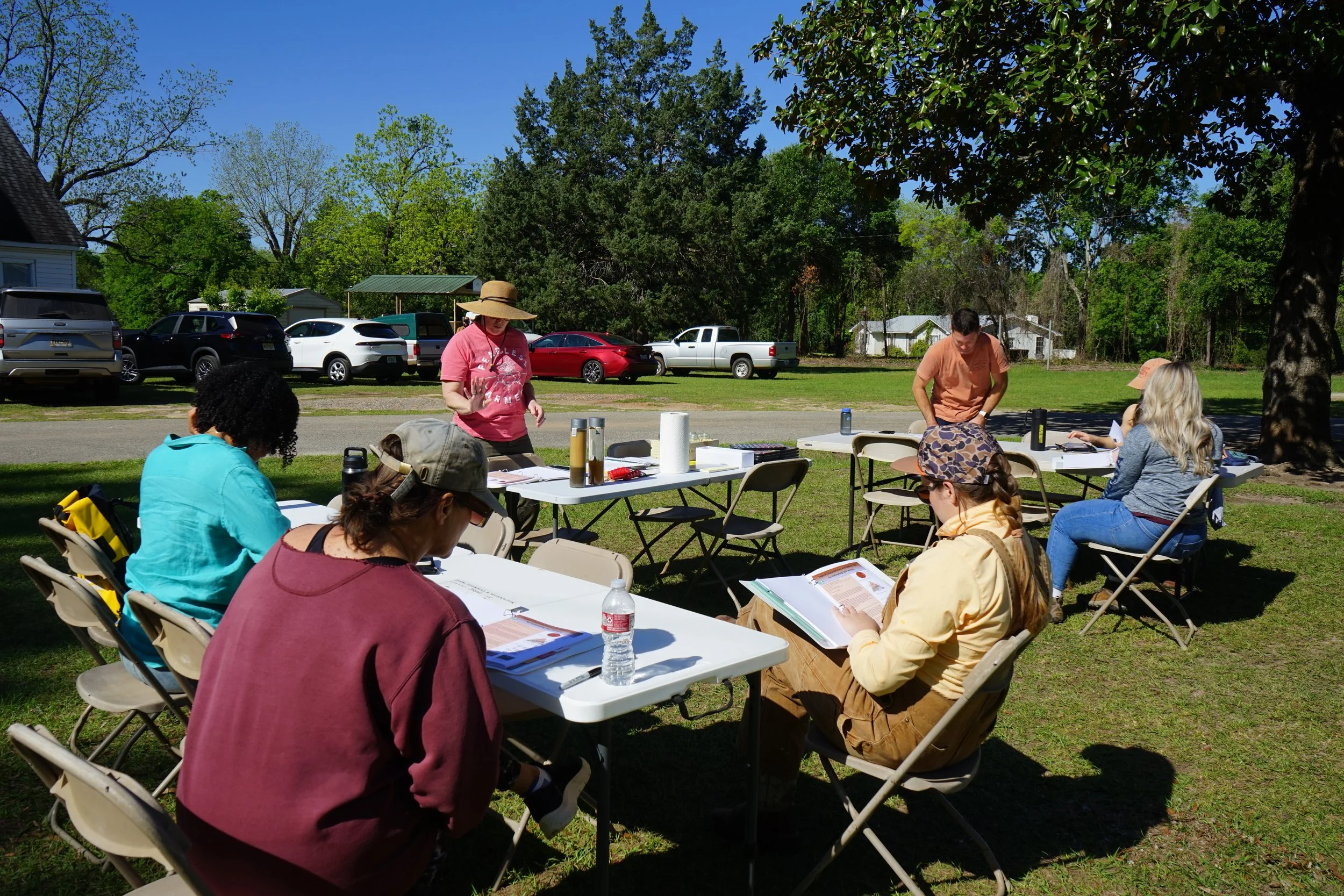
Following the Spark, we shift Focus through a locally hosted four-day intensive experiential learning journey shared across community and food system stakeholders who are ready to roll up their sleeves and reimagine their local food economy. Participants engage around shared themes such as:
Soil health and living systems
Regenerative food production
Nutrition and human health
The relationships required to move food from farm to table
We introduce skills in holistic decision-making and systems thinking. We establish relational trust and we lay the groundwork for coordinated collaborative action.
Time commitment: 4 full days plus any required travel to the intensive location. Intensive participants will also participate in 2 or 3 preparatory Zoom calls to establish a shared context prior to the event.
-
Building on the shared foundation established as community energy converges through our program lens, we Ignite the formation of a Food System Collaborative.
Over 10 weeks, Fearless Farmers facilitates a supportive environment where the Collaborative identifies challenges to address, opportunities to leverage, and the outcomes they want to achieve together. The result is a clear, actionable, community-led plan that reflects shared goals and local realities.
Time commitment: 2 - 4 hours per week for 10 weeks. -
Our program concludes with 10 months of ongoing facilitation, guidance, and accountability as the Collaborative puts their plan into action to Regenerate a community food system. We help the group stay aligned, navigate obstacles, and make measurable progress toward the desired results ensuring energy continues to radiate and sustain lasting change.
Time commitment: Variable and driven by the community-led plan established by the Food System Collaborative.
PROGRAM AUDIENCEFearless Farmers is for people who care about the health of their community and are ready to engage collaboratively.
Participants often include:
Farmers and food producers
Educators and informal learning leaders
Community organizers and advocates
Parents, caregivers, and engaged citizens
Organizational and institutional partners connected to food systems
You do not need to have all the answers.
You do need to be willing to listen, contribute, and collaborate.

What participants and communities gain
Through the Fearless Farmers program, participants gain:
A clearer understanding of how their local food system functions
Greater confidence in their role within that system
Stronger relationships across roles and sectors
Practical pathways for coordinated community action
Communities gain:
Increased alignment and shared purpose
Stronger support for local farmers
Greater food literacy and nutrition awareness
Momentum toward resilient, locally rooted food economies
Why this program is different

We believe thriving food systems emerge when communities are connected, aligned, and supported in working together.
Our approach is:
Place-based — grounded in local land, people, and context
Community-centered — recognizing that relationships are the system
Holistic — integrating environmental, social, and economic realities
Action-oriented — focused on coordination, collaboration, and follow-through